How to Make Money with a WordPress Blog: Complete Guide (2026)

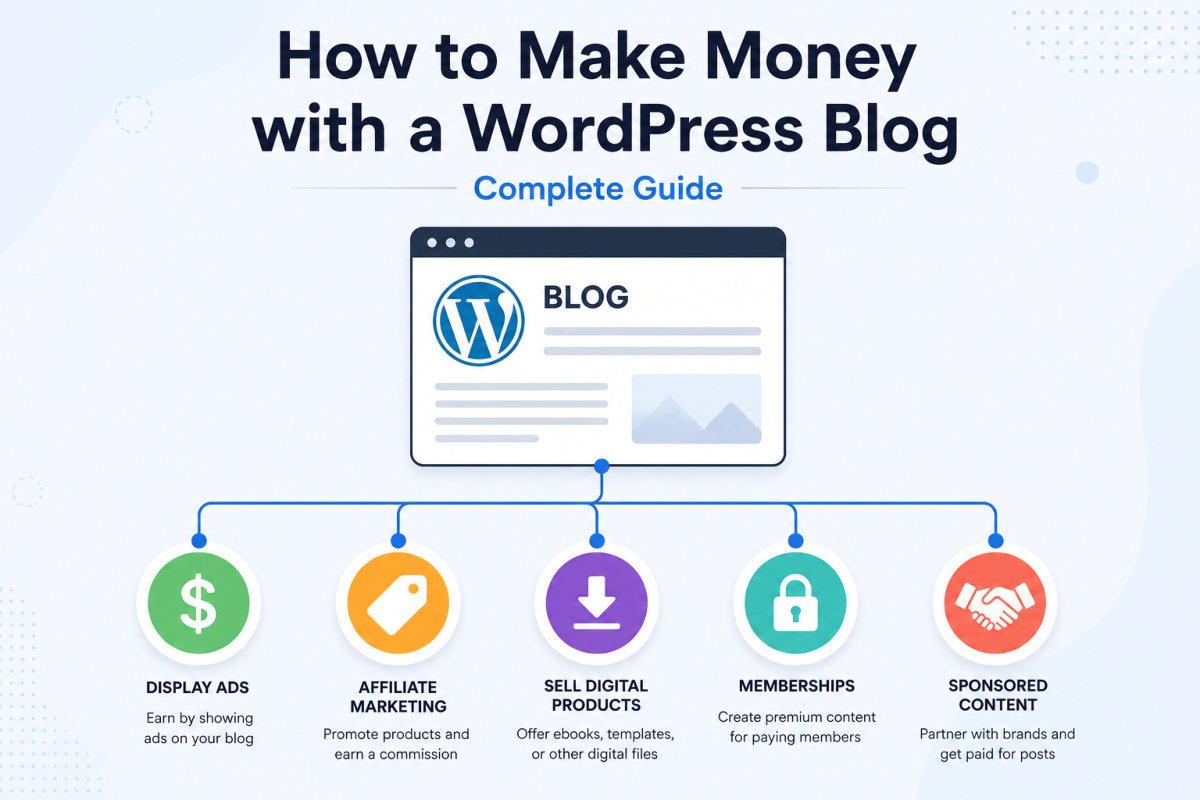
The realistic ways to monetize a WordPress blog are display advertising, affiliate marketing, digital products, membership or subscription content, and sponsored posts. Each requires a different amount of traffic and effort before it becomes meaningful income, display ads need real volume, affiliate marketing and digital products can work with a smaller, more engaged audience. Most successful blogs eventually combine two or three of these rather than relying on just one.
Before You Start
Make sure you have the following in place first:
- A published site with genuinely useful content already live, monetization amplifies a good site, it doesn’t fix a thin one
- Realistic expectations about timeline, covered honestly below
Every “make money blogging” article promises something slightly different, and a lot of them oversell how fast or easy it is. This guide is the honest version: what actually works, what it requires, and how long it realistically takes, so you can choose a path that fits your specific site instead of chasing all of them at once.
What You’ll Learn
- The five realistic ways to monetize a WordPress blog
- What traffic or audience size each method genuinely needs
- Which methods tend to work well together
- A realistic timeline for when monetization starts to matter
A Realistic Timeline, Before Anything Else
Most genuinely successful blogs take months, often six months to a year or more, of consistent publishing before monetization produces meaningful income. This isn’t discouraging, it’s just accurate. Early on, your effort is better spent on content quality and traffic than on monetization setup. Trying to monetize a brand-new site with minimal traffic usually just adds clutter without real return.
Method 1: Display Advertising
Ads placed throughout your content, paying based on views or clicks. This is the most passive method once set up, but it genuinely needs volume to matter.
| Network | Typical Entry Requirement | Best For |
|---|---|---|
| Google AdSense | No strict minimum traffic, easiest entry point | New or smaller sites getting started with ads |
| Mediavine | Roughly 50,000 monthly sessions | Established sites with meaningful, consistent traffic |
| Raptive | Roughly 100,000 monthly pageviews | Larger, more mature sites |
AdSense is the realistic starting point, we cover its full setup in a dedicated guide. Higher-tier networks pay meaningfully more per pageview, but they’re not accessible until your traffic genuinely justifies it.
Method 2: Affiliate Marketing
Recommending products or tools you genuinely use, earning a commission when readers purchase through your link. This works well even with a smaller, more engaged audience, unlike display ads, it doesn’t require massive volume to produce real income.
WebGomu’s own Intent Engineering principles apply directly here: recommend products only when they genuinely fit, and always acknowledge alternatives. This isn’t just an ethics point, readers can tell the difference, and it protects long-term trust far better than promoting whatever pays the highest commission. We cover this in full in our dedicated affiliate marketing guide.
Method 3: Digital Products
Templates, guides, checklists, or courses you create once and sell repeatedly, with no per-sale production cost. This method rewards genuine expertise and an audience that already trusts your content. We cover how to sell digital products without WooCommerce in a dedicated guide, since a full ecommerce setup often isn’t necessary for this specifically. If your expertise fits a structured, multi-lesson format, our guide to selling online courses covers the LMS-specific setup that a simple digital download doesn’t need.
Method 4: Membership or Subscription Content
A members-only area offering deeper content, downloads, or community access in exchange for recurring payment. This can be genuinely lucrative because it’s recurring revenue, but it demands ongoing content creation for paying members, a real, continuous time investment, not a one-time setup. We cover this fully in our dedicated membership sites guide.
WebGomu Tip: Don’t try to launch all five monetization methods at once. Pick the one or two that fit your content and audience best, get them genuinely working, then expand. Spreading thin across everything at once usually just means nothing performs particularly well.
Method 5: Sponsored Posts
Brands paying directly to be featured in your content. This typically requires an established audience and a track record before brands take genuine interest, it’s usually not a realistic starting point for a brand-new blog.
Which Method Fits Your Site?
| Your Situation | Best Starting Method |
|---|---|
| New site, building traffic | AdSense (low barrier) alongside genuine affiliate recommendations |
| Smaller but engaged, trusting audience | Affiliate marketing or a focused digital product |
| Established site with real traffic volume | Higher-tier display ad networks, potentially sponsored posts |
| Deep expertise in a specific area | Digital products, an online course, or a membership offering |
Going Deeper: A Guide for Every Method
Once you’ve picked a direction, each method has its own dedicated, deeper guide:
- How to Add Google AdSense to WordPress
- Affiliate Marketing on WordPress: A Beginner’s Guide
- How to Sell Digital Products on WordPress Without WooCommerce
- How to Sell Online Courses with WordPress
- Membership Sites on WordPress: How to Get Started
Common Mistakes
- Trying to monetize before the site has genuinely useful, consistent content and real traffic.
- Recommending affiliate products purely for commission, without genuinely believing in them, readers can tell.
- Launching every monetization method at once instead of focusing on one or two that fit.
- Expecting meaningful income within the first few months, when most successful blogs take significantly longer.
Recommended Tools
- Google AdSense — the realistic entry point for display advertising
- WooCommerce — if selling physical products fits your monetization plan (see our setup guide)
- Your existing analytics setup — understanding which content resonates most informs which monetization method genuinely fits your audience
Key Takeaways
- There are five realistic monetization methods, each with different traffic and effort requirements.
- Most successful blogs combine two or three methods rather than relying on just one.
- Monetization amplifies a good site, it doesn’t fix a thin or inconsistent one.
- Realistic timelines matter, most meaningful income takes six months to a year or more of consistent publishing.
Frequently Asked Questions
How much traffic do I need to make money from a WordPress blog?
It depends on the method. AdSense has no strict minimum, while premium ad networks typically require 50,000 to 100,000+ monthly sessions. Affiliate marketing and digital products can work with a smaller, more engaged audience.
How long does it take to make money blogging?
Most genuinely successful blogs take six months to a year or more of consistent publishing before monetization produces meaningful income. This varies significantly by niche and effort.
What’s the easiest monetization method to start with?
Google AdSense has the lowest barrier to entry, though genuine affiliate marketing, recommending tools you actually use, often produces better income relative to a smaller audience size.
Should I use multiple monetization methods at once?
Eventually, yes, most established blogs combine two or three. Starting with just one or two focused methods tends to work better than spreading thin across all of them immediately.
Do I need a large following before brands will pay for sponsored posts?
Generally yes, sponsored posts typically require an established audience and track record, making them a less realistic starting point for a brand-new blog compared to other methods.
Resources Links
Author:

Christoper Enolpe
Founder of WebGomu • WordPress Freelancer with 10+ Years of Experience
Christoper is the founder of WebGomu and a WordPress freelancer with over 10 years of hands-on experience building, optimizing, and maintaining WordPress websites. He writes practical, beginner-friendly guides based on real-world experience, covering WordPress, SEO, website performance, and AI tools to help readers build better websites with confidence.
Learn more: https://webgomu.com/about/
Get one WordPress tip every week
Start Here
The Ultimate Beginner’s Guide to WordPress (2026): Build Your First Website Without Coding
Popular Guides
Our Partner

More from the blog
How to Sell Online Courses with WordPress (2026)
Membership Sites on WordPress: How to Get Started (2026)