“Weekly WordPress Tip”: A Newsletter Strategy for Bloggers

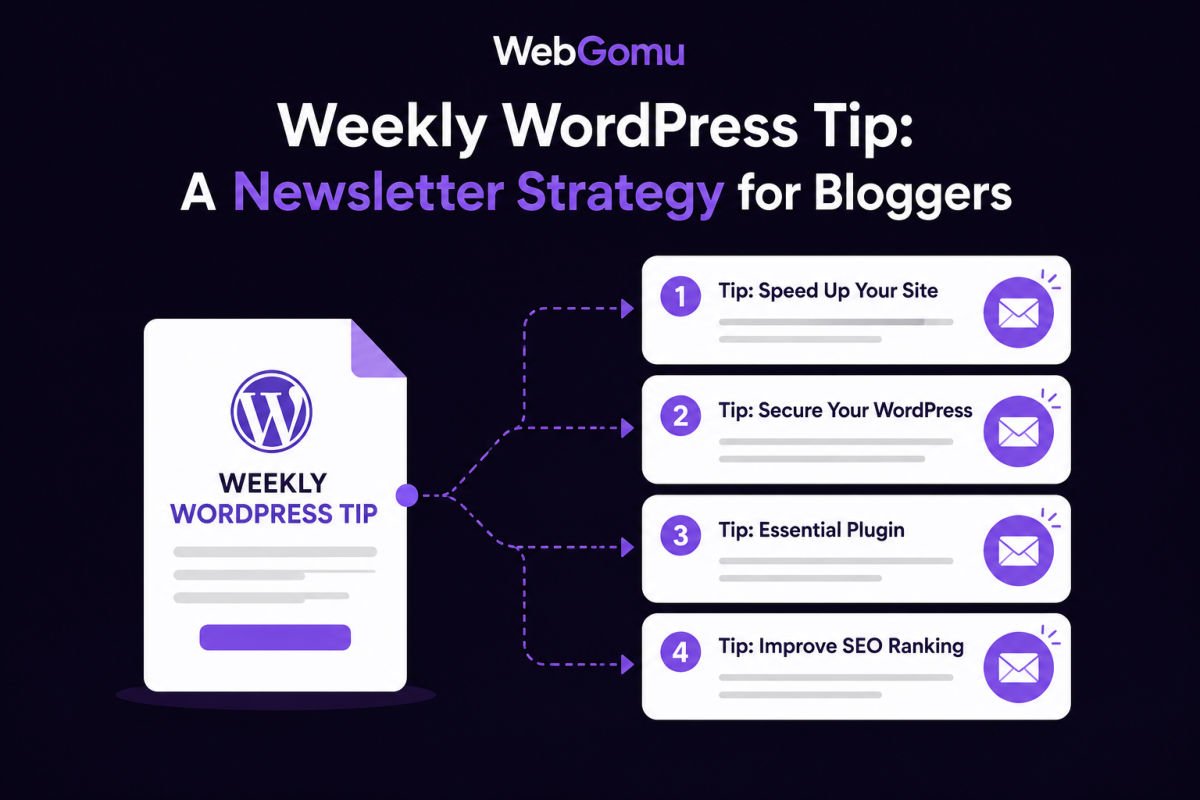
A “Weekly Tip” newsletter repurposes content you’ve already published into a single, bite-sized email lesson sent on a consistent schedule. Instead of writing new material every week, pick one useful, specific idea from an existing article, distill it into a few short paragraphs, and link back to the full post for readers who want more. This keeps your list warm with minimal extra writing, and it’s the single most sustainable newsletter format for a solo blogger.
Before You Start
Make sure you have the following in place first:
- An email list set up (see our email list guide if you haven’t yet)
- At least a handful of published articles to draw from
Most beginners who try to run a newsletter burn out within a month, not because the idea was wrong, but because they treated every send as a brand-new writing project. A “Weekly Tip” format fixes this. You’re not creating new content, you’re repackaging what you’ve already written into something shorter, more digestible, and genuinely sustainable long-term.
What You’ll Learn
- Why repurposing beats writing new content for every send
- How to pick the right source material each week
- The simple structure that makes a “tip” email actually work
- How to build this into a repeatable weekly rhythm
Why Repurpose Instead of Writing New Content
A strong article you’ve already published shouldn’t be a one-time win that quietly disappears after its first week. Repurposing it into smaller pieces, like a single newsletter tip, extends its value over time and meets subscribers where their attention actually is, a full article takes real time to read, a tip takes thirty seconds.
Step 1: Pick the Right Source Content
Not every article makes a good source. Look for:
- Posts with a clear, single actionable takeaway, not broad overview content
- Your better-performing articles, if you have Search Console or Analytics data (see our Search Console guide), posts already resonating with readers tend to repurpose well
- Evergreen content over time-sensitive posts, so the tip stays useful regardless of when a subscriber actually reads it
Step 2: Extract One Specific Tip, Not the Whole Article
The mistake to avoid: cramming an entire 1,500-word article into an email. Pick a single section, mistake, or step, and build the entire email around that one idea. For example, from a full article on WordPress security, a single email might focus entirely on “why ‘admin’ is a risky username,” not the whole security checklist at once.
WebGomu Tip: If you’re stuck choosing what to extract, look at your article’s Common Mistakes or FAQ section specifically. These sections are already written in exactly the compact, single-idea format a good tip email needs, often requiring minimal rewriting.
Step 3: Structure the Email
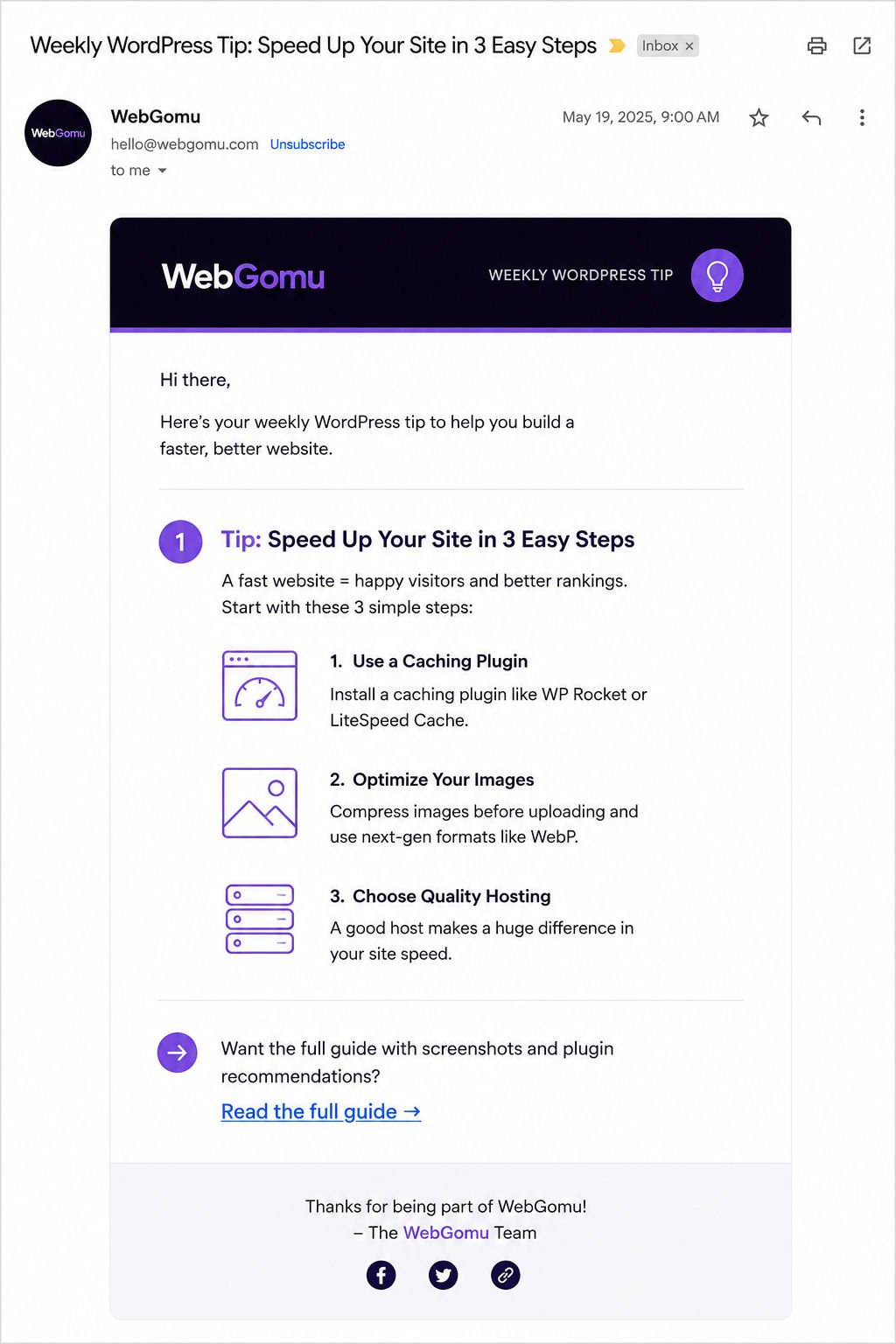
A reliable, simple structure:
- One clear subject line stating the tip directly, not a vague teaser
- A short opening, one or two sentences setting up why this matters
- The tip itself, explained in plain language, a few short paragraphs at most
- A link back to the full article, for anyone who wants the complete picture
Step 4: Build a Repeatable Rhythm
Batch this work rather than starting from scratch each week. A practical rhythm:
- Once a month, review your published articles and pick 4-5 tips worth extracting
- Draft all 4-5 in one sitting, since you’re already in that mindset, this is faster than spreading it across separate weeks
- Schedule them in advance using your email provider’s scheduling feature
This turns a weekly obligation into a monthly batch task, which is far easier to sustain long-term.
A Note on AI Search Visibility
If you publish your newsletter archive publicly, for example, as a page on your site, it becomes indexable and citable content, not just something that lives and dies in an inbox. Structured content with clear headers and specific, factual points tends to be favored by AI systems looking to cite sources, so a well-structured “tip” archive can genuinely double as additional site content, not just an email exclusive.
Troubleshooting
I’m running out of source material
Revisit older articles you haven’t repurposed yet, and check your Common Mistakes and FAQ sections specifically, they’re usually packed with individually extractable tips you haven’t used yet.
My open rates are dropping over time
Check whether your subject lines have become vague or repetitive. A specific, concrete tip stated directly in the subject line consistently outperforms a generic teaser.
Subscribers say the emails feel too short or thin
This is usually a sign the extracted tip wasn’t specific enough. A genuinely useful, narrow tip reads as valuable even at a short length, a vague, broad one can feel thin regardless of length.
Common Mistakes
- Trying to fit an entire article into a single email instead of one focused tip.
- Writing every send from scratch instead of batching and repurposing existing content.
- Using vague subject lines instead of stating the specific tip directly.
- Letting the newsletter archive live only in inboxes, missing the chance to also make it citable, indexable content.
Recommended Tools
- Your existing email provider’s scheduling feature — no new tool needed, just batching and scheduling sends in advance
- Search Console or Analytics data — helps identify which existing posts are worth repurposing first
Key Takeaways
- A “Weekly Tip” format repurposes existing content instead of demanding new writing every send.
- Extract one specific, actionable idea per email, not a whole article compressed down.
- Common Mistakes and FAQ sections are often already tip-ready with minimal rewriting.
- Batch a month’s worth of tips in one sitting, then schedule them in advance.
Frequently Asked Questions
Do I need to write new content every week for a newsletter?
No. A “Weekly Tip” format specifically repurposes content you’ve already published, making it far more sustainable than writing fresh material for every single send.
How do I choose which article to repurpose first?
Start with your better-performing posts if you have Search Console or Analytics data, and prioritize evergreen content with a clear, specific takeaway over broad overview articles.
How long should a “Weekly Tip” email be?
Short, a few paragraphs focused on one specific idea, plus a link back to the full article for anyone wanting more depth.
Should I publish my newsletter archive publicly on my site?
It’s worth considering. A publicly published, well-structured archive becomes indexable and potentially citable by AI search systems, extending the newsletter’s value beyond just inbox delivery.
How often should I batch-write newsletter content?
Once a month is a practical rhythm for most solo bloggers, drafting several weeks’ worth of tips in one sitting, then scheduling them in advance.
Resources Links
Author:

Christoper Enolpe
Founder of WebGomu • WordPress Freelancer with 10+ Years of Experience
Christoper is the founder of WebGomu and a WordPress freelancer with over 10 years of hands-on experience building, optimizing, and maintaining WordPress websites. He writes practical, beginner-friendly guides based on real-world experience, covering WordPress, SEO, website performance, and AI tools to help readers build better websites with confidence.
Learn more: https://webgomu.com/about/
Get one WordPress tip every week
Start Here
The Ultimate Beginner’s Guide to WordPress (2026): Build Your First Website Without Coding
Popular Guides
Our Partner

More from the blog
How to Automate Email Newsletters from Your Blog (2026)
Connecting WordPress to Zapier/Make: A Beginner’s Guide (2026)