AI Search Optimization Checklist: 36 Weekly, Monthly & Quarterly Tasks

Before You Start
Make sure you have the following in place first:
- Access to Google Search Console and, if you use Bing, Bing Webmaster Tools. See my guide on setting up Google Search Console for WordPress.
- A current list of your most important pages, including service pages, product pages, guides, and high-converting articles.
- Analytics or another way to review organic visits, engagement, leads, and sales. AI citations and referral visits are useful signals, but they are not the same metric.
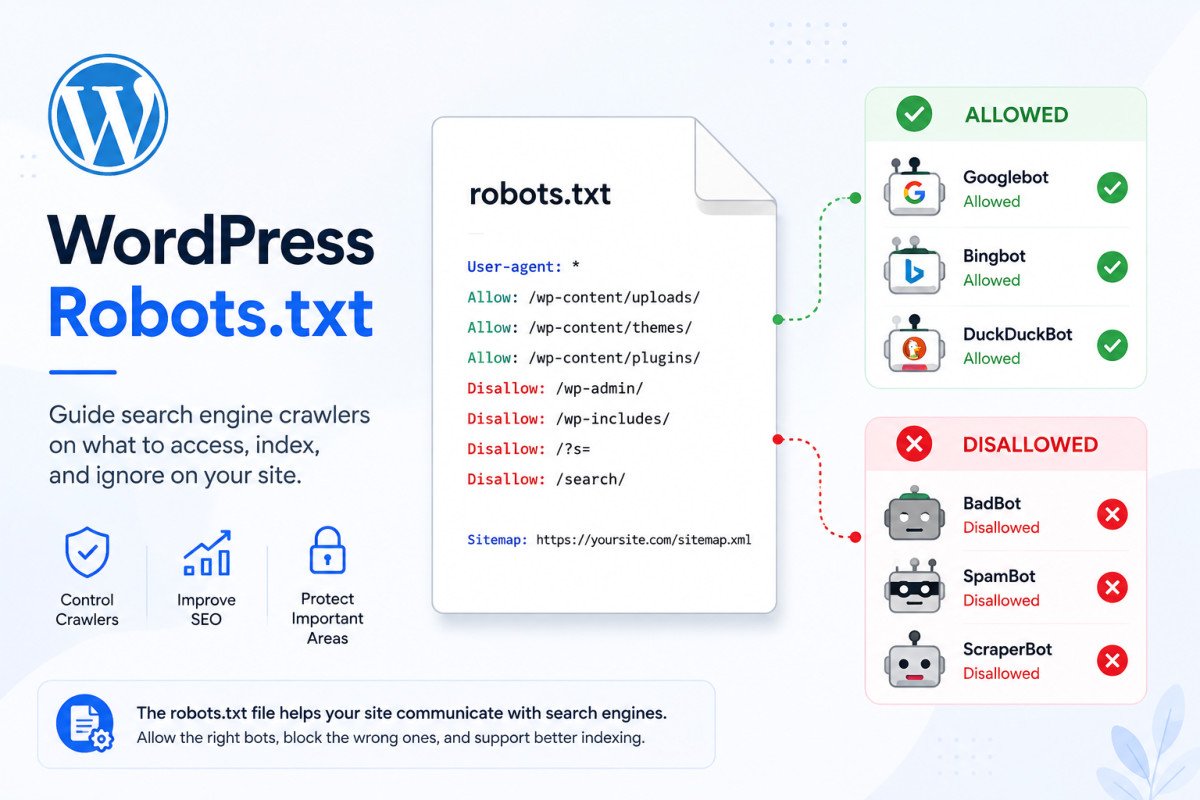
- A clear distinction between search crawlers and training crawlers before changing robots.txt rules. My guide to WordPress robots.txt can help you review crawler access safely.
A page can be technically eligible and still not appear in an AI-generated answer. Google says its AI features use the same core SEO foundations, and that crawling, indexing, and serving are not guaranteed. The goal of this checklist is not to “trick” an AI system. It is to make your site easier to discover, understand, verify, and cite when it genuinely answers a searcher’s question.
What You’ll Learn
- Which AI search visibility and content tasks to review every week
- How to check crawl access, indexability, structured data, and brand descriptions each month
- How to build trust and topical authority through real evidence and original work
- Which metrics are useful—and which AI visibility numbers should not be mistaken for rankings
How to Use This AI Search Optimization Checklist
Use the schedule as a routine, not a promise of rankings. Start with a small group of pages that matter to your business. Record a baseline, make changes that improve the real page, then review what changes over time. Avoid editing a page just to make it look “AI optimized.”
AI search is not one platform or one report. Google Search Console includes traffic from Google AI features in the overall Web search performance data. Bing Webmaster Tools has a separate AI Performance report for citations across supported Microsoft experiences. Other platforms may use different crawlers, surfaces, and reporting. Compare like with like, and note the tool and date range whenever you record a result.
Weekly AI Search Optimization Tasks
Use the weekly review to catch changes early and keep your most important pages accurate. You do not need to audit every URL every week. Rotate through priority pages and investigate meaningful changes rather than reacting to every small fluctuation.
1. Track visibility for a focused set of questions
- Check how your brand appears for a small, repeatable set of questions your customers actually ask.
- Note whether your brand is mentioned, whether a page from your site is cited, and whether the answer describes your business accurately.
- Record competitor mentions and citations when they appear for the same question, but treat observations from manual tests as directional rather than a complete measurement.
- Review citation data in available tools. Bing’s AI Performance report can show cited pages and grouped grounding queries, but its citation counts do not represent rankings, clicks, or authority.
- Watch for sudden losses in organic clicks or impressions in Search Console and investigate the affected pages before drawing conclusions.
Keep the questions, platform, location, and date consistent when comparing manual checks. AI answers can vary, so one answer is not proof that a page has gained or lost visibility.
2. Improve one useful page at a time
- Publish or improve content that answers a genuine customer question with specific, useful detail.
- Place a concise answer near the beginning of the relevant section, then provide the context, steps, examples, and limitations a reader needs.
- Create comparison content only when you can provide a fair, substantive comparison—not just a list of keywords or competitor names.
- Update outdated claims, product details, statistics, screenshots, and examples. Explain important changes when that helps the reader.
- Refresh pages that attract search traffic or conversions but no longer reflect your best advice.
A short answer block can help a reader quickly understand the page, but it is not a special AI ranking factor. Keep it accurate, make sure the surrounding article adds genuine value, and avoid repeating the same generic answer across dozens of pages. Google’s guidance emphasizes original, useful content and cautions against creating many pages primarily to manipulate search or AI visibility. For a broader content workflow, see our guides to optimizing a WordPress site for AI search and keyword research for bloggers.
3. Build and maintain topical authority
- Look for relevant mentions of your brand, authors, products, or original work on independent sites.
- Respond to legitimate media, partner, and community opportunities where you can contribute expertise.
- Review referral traffic from relevant publications and industry resources, not just the number of links.
- Identify useful topics where competitors are referenced more often, then determine whether your site has a real content or evidence gap.
- Keep a list of accurate, editorially appropriate places where your team could contribute original insight.
Do not buy low-quality mentions or manufacture links. The aim is to earn recognition for useful work, not to inflate a third-party metric.
Monthly AI Search Optimization Tasks
Once a month, review the technical and brand signals that influence whether a platform can access and interpret your content. A monthly cadence is usually more practical than repeatedly changing crawler settings or rewriting your About page.
4. Check discoverability and indexing
- Confirm that important pages return a successful response and are not blocked by accidental robots.txt rules, noindex directives, login walls, or hosting security settings.
- Inspect a sample of priority URLs in Google Search Console. Check the selected canonical, indexing status, and the page Google can actually render.
- Review new coverage or indexing problems. If an important URL is not indexed, diagnose the cause before requesting another crawl. Our guide to fixing “Discovered – currently not indexed” explains common checks.
- Check that important content is available as readable text. Do not place essential answers only inside images, inaccessible scripts, or downloadable files.
- Validate structured data and confirm that it matches visible page content. Schema can clarify supported page details, but it does not guarantee indexing, rankings, or an AI citation.
Google says a page must be indexed and eligible to appear with a snippet to be considered as a supporting link in its AI Search features. Google also says there are no special AI-only technical requirements or schema types needed for AI Overviews and AI Mode. Review the current Google guidance on AI features and your website before adding markup or changing site controls.
5. Review crawler policies carefully
First decide which platform and purpose you are reviewing. Search retrieval, user-triggered page access, and model training can involve different crawlers and controls. They are not interchangeable.
For example, OpenAI documents OAI-SearchBot for surfacing sites in ChatGPT search and GPTBot for crawling content that may be used to train its foundation models. OpenAI states that these robots.txt settings are independent. Review the platform’s current documentation and your business preferences before changing access. Do not copy a robots.txt snippet from another site without checking what it blocks.
For Google Search, review Googlebot access and use Search Console’s URL Inspection tool when diagnosing a page. Keep essential CSS and JavaScript resources accessible where needed for rendering, and check that a CDN, firewall, or hosting provider is not unintentionally blocking legitimate crawlers. See the official OpenAI crawler documentation and Google’s Search technical requirements for platform-specific details.
6. Check brand clarity and consistency
- Review how your brand is described on your About page, contact page, business profiles, and key third-party listings.
- Correct outdated company descriptions, product names, service areas, opening hours, or contact details where you control the source.
- Check whether your public descriptions distinguish your business from similarly named companies and explain what you actually offer.
- Look for important concepts or services that customers associate with your category but that your site does not explain clearly.
- Compare the sources that appear in AI answers with the sources you consider accurate and authoritative. Treat the pattern as a research lead, not a definitive ranking recipe.
Consistent information helps people verify who you are. It does not mean that every platform will use the exact same wording or cite your preferred page.
7. Check trust signals and customer evidence
- Review recent ratings and reviews on the platforms that matter to your customers. Respond professionally and follow each platform’s rules.
- Look for recurring, credible customer feedback and fix the underlying service or product issue where possible.
- Correct factual errors in your own content and in external profiles you control. Do not claim you can directly edit an AI answer unless the platform provides that control.
- Keep customer proof current, with permission and enough context to make testimonials or case studies verifiable.
- Refresh case studies with accurate dates, methods, outcomes, and limitations. Do not imply that one customer’s result is typical unless you can support that claim.
- Make expertise and authorship clear where it is relevant. Show who created or reviewed important advice and what experience supports it.
Quarterly AI Search Optimization Tasks
Use the quarterly review for work that takes longer than a page refresh. The goal is to create evidence and expertise that is genuinely difficult to replace with a generic summary.
8. Invest in durable authority
- Publish original research, a transparent survey, a useful benchmark, or an analysis based on data you are permitted to use.
- Turn a meaningful finding into a report, chart, or case study that explains the method and its limitations.
- Build relationships with relevant industry publications and experts by contributing original expertise—not by mass-sending generic pitches.
- Keep author and analyst biographies accurate, with relevant experience, credentials, and links to work that supports their expertise.
- Expand topical coverage where your audience needs it. Connect related guides with descriptive internal links instead of publishing near-duplicate articles.
- Review the overall AI visibility plan and decide which platforms, topics, and business outcomes deserve attention in the next quarter.
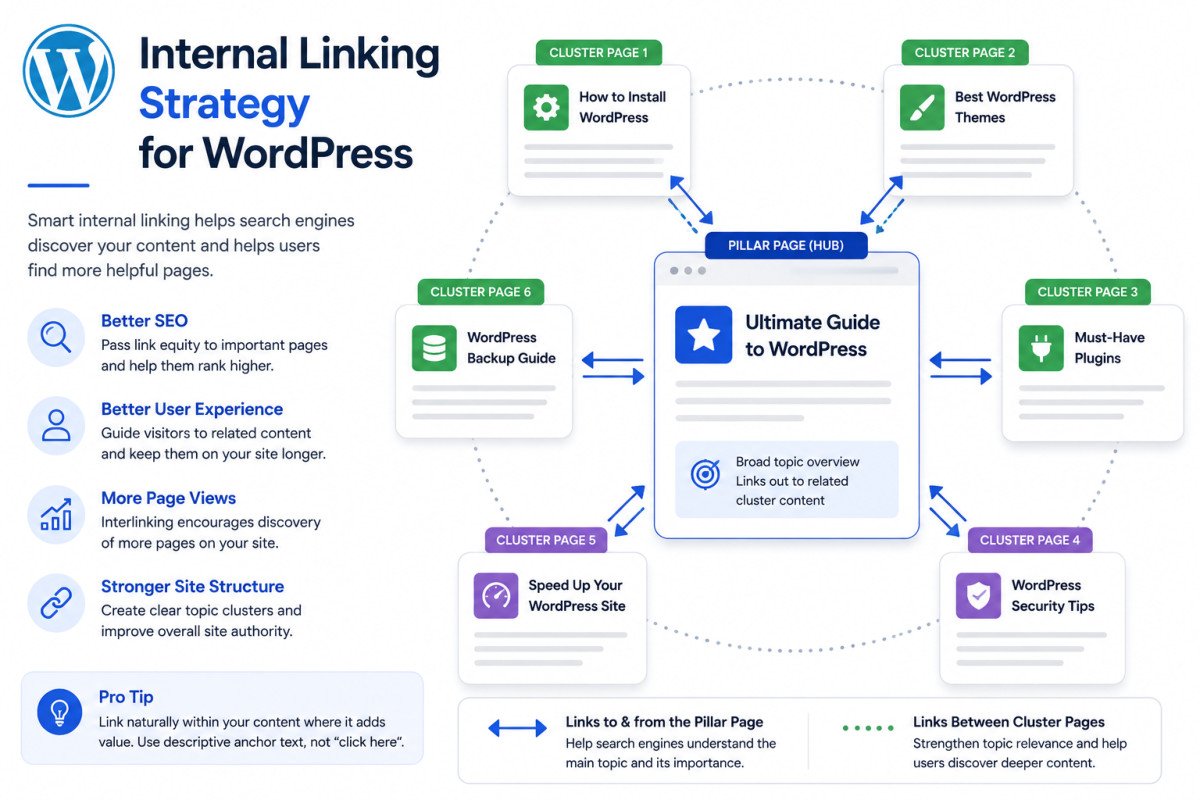
Original research is not a shortcut to citations, and publishing more pages is not automatically better. Prioritize work that helps your audience and gives other writers a credible reason to reference your site. Use our guides to WordPress internal linking and the WordPress SEO checklist to connect this work to your existing search strategy.
How to Measure AI Search Visibility
Track several kinds of evidence instead of relying on a single “AI visibility” score:
- Organic search performance: Search Console impressions, clicks, queries, and landing pages. Google reports AI-feature activity within overall Web search performance, rather than as a standalone AI ranking report.
- AI citations: Cited URLs and query themes in a platform’s own reporting, when available. Bing Webmaster Tools’ AI Performance report includes citation activity and grounding-query groupings for supported experiences.
- Business outcomes: Qualified visits, leads, subscriptions, sales, or other conversions from organic and referral channels.
- Brand accuracy: Whether answers describe your business, products, and expertise correctly when you check a consistent set of questions.
A citation is not a click, and a click is not automatically a conversion. Bing notes that its AI Performance data is aggregated and does not measure rankings, traffic, authority, or why a page was cited. Use citation trends alongside Search Console and analytics, and avoid assigning cause to one content edit based on a short-term change. Learn more in Bing’s AI Performance documentation.
Common AI Search Optimization Mistakes
- Expecting a checklist, schema type, or AI-specific file to guarantee a citation or a first-page ranking.
- Blocking a search crawler because you confused search retrieval with model-training controls.
- Generating many lightly rewritten pages for every possible prompt instead of answering real audience needs.
- Adding unsupported claims, statistics, testimonials, or author credentials to make content appear more authoritative.
- Judging visibility from one manually generated answer, one prompt, or one AI tracking score.
- Changing robots.txt, canonical tags, or noindex settings without understanding the effect on search access.
- Adding structured data that does not match visible content or expecting markup alone to earn a special display.
Recommended Tools
- Google Search Console: Review organic search performance, inspect important URLs, and diagnose indexing or crawling issues.
- Bing Webmaster Tools: Review Bing search data and its AI Performance citation reporting where available.
- Web analytics: Connect visibility changes to qualified visits and business outcomes instead of counting mentions alone.
- Technical SEO crawler: Run a monthly site audit for broken links, redirects, noindex errors, duplicate titles, and other crawlability issues.
- AI visibility monitoring platform: Use one only if it answers a specific measurement need, and check which engines, prompts, dates, and citation types it covers. Paid monitoring products are optional; they do not replace first-party analytics or technical checks.
Key Takeaways
- Make the fundamentals strong first: useful content, crawlable pages, clear internal links, accurate facts, and a good experience.
- Review content and visibility weekly, technical access and brand clarity monthly, and original authority-building work quarterly.
- Check crawler rules by platform and purpose. Search crawlers and training crawlers may be controlled separately.
- Measure citations, organic clicks, and conversions as different outcomes; none alone proves that an optimization caused a ranking change.
- No SEO professional can guarantee a Google position or AI citation. Focus on controllable improvements and report results honestly.
WebGomu Tip: Keep the visible FAQ below if it helps answer real reader questions, but do not add FAQPage JSON-LD just to chase a Google rich result. Google’s current documentation lists the FAQ rich result feature as deprecated. Structured data should only be used when it is supported, accurate, and consistent with visible page content.
Frequently Asked Questions
What is an AI search optimization checklist?
An AI search optimization checklist is a recurring set of actions for helping search and AI systems discover, understand, and accurately reference useful website content. It usually covers crawlability, content quality, brand information, trust, authority, and measurement. It supports good SEO work but cannot guarantee visibility.
How often should I review AI search visibility?
Check a small set of priority topics weekly, review technical and brand issues monthly, and plan larger authority-building work quarterly. Use the same platforms and comparison methods over time because AI answers can vary from one check to another.
Does Google require special AI SEO or schema markup?
Google says its AI Overviews and AI Mode use existing Search foundations and do not require special AI-only optimization or schema. Pages still need to meet Google’s technical requirements and be eligible to appear in Search. Correct structured data can help describe supported content types, but it does not guarantee an AI citation.
Should I block AI crawlers in robots.txt?
That depends on the crawler’s purpose and your preferences. Some platforms document separate controls for search discovery and model training. Review the current documentation for each platform before changing robots.txt, and test that you are not accidentally blocking search crawlers or useful site resources.
Can I track whether my site is cited by AI tools?
Some platforms provide citation reporting. Bing Webmaster Tools, for example, reports citations and related query groupings for supported AI experiences. These figures are not equivalent to rankings, clicks, or traffic. Pair them with Search Console, analytics, and business outcomes.
Does FAQ schema help an article rank in AI search?
Do not add FAQ schema on the assumption that it will improve rankings or trigger a Google rich result. Google has deprecated its FAQ rich result feature. A visible FAQ can still help readers when it answers useful questions, but markup should only be added when a current search feature supports it and the page meets that feature’s rules.
Resources Links
Author:

Christoper Enolpe
Founder of WebGomu • WordPress Freelancer with 10+ Years of Experience
Christoper is the founder of WebGomu and a WordPress freelancer with over 10 years of hands-on experience building, optimizing, and maintaining WordPress websites. He writes practical, beginner-friendly guides based on real-world experience, covering WordPress, SEO, website performance, and AI tools to help readers build better websites with confidence.
Learn more: https://webgomu.com/about/
Get one WordPress tip every week
Start Here
The Ultimate Beginner’s Guide to WordPress (2026): Build Your First Website Without Coding
Popular Guides
Our Partner

More from the blog
Best SEO Plugins for WordPress in 2026: 4 Options Compared
Internal Linking Strategy for WordPress (2026 Guide)